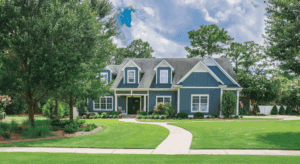
Buying Your First Home in NJ: A Step-by-Step Guide for 2026
Buying your first home in New Jersey is one of the most significant financial decisions you will make. It is also one of the most rewarding. But the Garden State has its own specific process, its own legal requirements, and its own programs designed to help first-time buyers get to the closing table. If you approach it without understanding how the New Jersey process actually works, you will face surprises that could cost you time, money, or the home you wanted.
This guide walks you through every step from start to finish, with the specific NJ details that matter, so you know exactly what to expect.
Step One: Understand What You Can Actually Afford
Before you look at a single listing, you need an honest picture of your financial position. That means looking at three numbers: your monthly income, your monthly debt obligations, and your savings available for a down payment and closing costs.
Most lenders use two key ratios. Your housing expense ratio, meaning your total monthly mortgage payment including principal, interest, taxes, and insurance, should generally not exceed 28% to 31% of your gross monthly income. Your total debt-to-income ratio, which includes your housing payment plus all other monthly debt obligations like car payments, student loans, and credit cards, should generally stay at or below 43% to 45% depending on the loan program.
In South Jersey and the Camden County market, Zillow’s Home Value Index puts the average home value at $350,617. At a 6.5% interest rate with a 5% down payment on a $350,000 home, your principal and interest payment alone would run approximately $2,120 per month before taxes and insurance. Running those numbers honestly before you start shopping is the foundation of a successful search.
Step Two: Check and Strengthen Your Credit Score
Your credit score has a direct impact on the interest rate you qualify for, which affects your monthly payment for the life of the loan. The general thresholds for major loan programs are a minimum of 580 for FHA loans with a 3.5% down payment, 620 for most conventional loans, and 640 for NJHMFA state assistance programs which provide down payment assistance. VA loans for eligible Veterans have no official minimum but most lenders require a 620 or higher in practice.
If your score needs work, the highest-impact steps are paying down revolving credit balances below 30% of your credit limit, making every payment on time for at least six months before applying, and avoiding opening any new credit accounts in the months leading up to your mortgage application. Even a 20-point improvement in your score can meaningfully change your interest rate.
Step Three: Explore New Jersey’s First-Time Buyer Programs Before You Apply
New Jersey has state-funded assistance programs that many first-time buyers never learn about until it is too late to use them. The most important is administered by the New Jersey Housing and Mortgage Finance Agency, known as NJHMFA.
The NJHMFA Down Payment Assistance Program provides up to $15,000 to qualified first-time buyers to use toward down payment and closing costs. The assistance is structured as an interest-free, five-year forgivable second loan with no monthly payment. As long as the home remains your primary residence for five years without refinancing or transfer, the loan is forgiven entirely. To access it, you must pair it with an NJHMFA first mortgage, which is a competitive 30-year fixed-rate government-insured loan originated through a participating NJHMFA lender. Income and purchase price limits apply and vary by county and household size.
If you are also a first-generation homebuyer, meaning neither of your parents ever owned a home or you were raised in foster care, the NJHMFA First Generation Down Payment Assistance Program provides an additional $7,000 on top of the standard DPA, bringing total potential assistance to $22,000. That is a meaningful amount of money, and it is specifically designed for buyers in exactly this situation.
You are considered a first-time homebuyer under NJHMFA rules if you have not owned a primary residence within the previous three years, which means buyers who previously owned and sold are eligible after a three-year gap.
For Veterans, the VA home loan benefit eliminates the down payment requirement entirely and removes the private mortgage insurance cost that conventional borrowers face when putting down less than 20%. The details on maximizing the VA benefit are covered in our post What Most Veterans Don’t Know About Their VA Home Loan Benefit.
Step Four: Get Pre-Approved, Not Just Pre-Qualified
There is an important distinction between pre-qualification and pre-approval that too many first-time buyers learn the hard way. Pre-qualification is an informal estimate based on self-reported information. Pre-approval is a formal review where the lender verifies your income, assets, employment, and credit and issues a conditional commitment to lend. In a competitive South Jersey market where Camden County homes go to pending in around 18 days, a pre-qualification letter is essentially worthless. Sellers will not take your offer seriously without a full pre-approval.
To get pre-approved you will need to provide two years of federal tax returns and W-2s, recent pay stubs covering the last 30 days, two to three months of bank and asset account statements, your Social Security number for a credit pull, and documentation of any other income sources including rental income, alimony, or business income. If you are self-employed, expect to provide two years of business returns as well.
Get pre-approved before you start attending showings. Knowing your exact budget shapes every decision in your search, and in a fast-moving market you need to be ready to write an offer the same day you find the right home.
Step Five: Choose the Right Loan Program for Your Situation
New Jersey buyers have access to several loan types and the right one depends on your credit, your savings, and your military status.
FHA loans require as little as 3.5% down with a credit score of 580 or higher. They carry mortgage insurance premiums for the life of the loan unless you refinance, but they are the most accessible option for buyers with limited savings or lower credit scores. The 2026 FHA loan limit for single-family homes in Camden County is $524,225 according to the FHA loan limits database.
Conventional loans require a minimum 3% down for some programs and 5% more typically, with a credit score of 620 or higher. Private mortgage insurance is required on any conventional loan with less than 20% down but can be removed once you reach 20% equity, unlike FHA mortgage insurance. Conventional loans offer more flexibility for higher-priced properties.
VA loans for eligible Veterans and active duty service members require zero down payment and no private mortgage insurance, making them the most cost-effective loan available. The funding fee can be financed into the loan.
USDA loans offer zero-down financing for properties in designated rural areas. Parts of South Jersey qualify depending on the specific municipality.
Step Six: Search with Purpose and Know Your Local Market
With your pre-approval in hand, your search can be focused and efficient. Understanding what drives value in specific South Jersey communities will help you make faster, smarter decisions.
In Camden County, the walkable boroughs, Collingswood, Haddonfield, Haddon Township, and Haddon Heights, offer PATCO rail access, walkable downtowns, and established character but tight inventory. Voorhees and Cherry Hill offer more inventory, newer construction options, and strong school districts. Gloucester Township provides the most affordable entry points in the county. Each community has its own price dynamics, school district considerations, and competitive environment. Our Top Neighborhoods to Buy a Home in Camden County, NJ covers every community in detail.
For the full picture of what the market is doing right now across Camden, Burlington, Gloucester, and Salem counties, our South Jersey Real Estate Market Update 2026 gives you the current data you need.
Step Seven: Make a Strategic Offer
When you find the right home, your offer needs to be grounded in what comparable homes have actually sold for, not what the listing is priced at. Your agent will pull recent comparable sales, analyze days on market, and advise on where to position your offer relative to market conditions in that specific neighborhood.
In addition to price, sellers evaluate the strength of your financing, the size of your earnest money deposit, your proposed closing date, and the contingencies you include. A clean, well-structured offer at the right price will consistently outperform a higher offer with weak terms or financing that looks uncertain. Our post 4 Ways To Give Your Offer an Edge This Spring covers the specific strategies that make offers stand out in today’s market.
Step Eight: Understand New Jersey’s Attorney Review Period
This is the step that surprises most out-of-state buyers and many New Jersey buyers too. New Jersey is one of only a handful of states where attorney review is standard practice in residential real estate transactions, and it is one of the most important consumer protections in the entire process.
Once both parties sign a purchase contract, a three-business-day attorney review period begins automatically. During this window, either party’s attorney can disapprove the contract, propose modifications, or add contingency language without penalty. The three-day clock starts from the time the fully signed contract is delivered, not the date it was signed. Saturdays count as business days for this purpose. Sundays and federal holidays do not.
During attorney review, your attorney will typically review all contract terms, strengthen inspection contingency language, confirm the mortgage contingency deadline, address any property-specific concerns like oil tanks, well or septic systems, or flood zone status, and negotiate any modifications with the seller’s attorney. This negotiation can extend beyond the initial three-day window as both sides work toward agreement on revised terms.
You should have a real estate attorney selected and ready to act before you sign any contract. Do not wait until after you have an accepted offer to start looking for one. Attorney fees in New Jersey typically run $1,200 to $2,500 for a standard residential transaction according to closing cost data compiled for NJ buyers.
Step Nine: Complete Your Home Inspection
Once the contract is binding after attorney review, your inspection window typically runs 7 to 14 days depending on the contract terms. Use every day available to you. A thorough home inspection covers the structural components, roof, electrical system, plumbing, HVAC, appliances, and any visible signs of water intrusion or settling.
In New Jersey, radon testing is particularly important. New Jersey has elevated radon levels in many areas due to its geology, and radon is the second leading cause of lung cancer in the United States according to the Environmental Protection Agency. A radon test costs $100 to $200 and is well worth adding to your standard inspection.
For older homes, lead paint testing and oil tank sweeps are also worth considering depending on the age and history of the property. The inspection cost for a standard home in New Jersey runs approximately $450 to $700, with comprehensive packages including pest, radon, and additional testing reaching $1,200 according to published NJ buyer closing cost data.
Inspection results give you the ability to negotiate repairs, request credits, or in some cases exit the contract if material defects are discovered that the seller is unwilling to address. Your attorney and agent will guide you through that process if issues arise.
Step Ten: Finalize Your Mortgage and Complete the Appraisal
Once you have a binding contract, formally submit your complete mortgage application immediately. Do not wait. Your mortgage contingency deadline, typically 30 to 45 days from contract ratification, is the window within which you must obtain a written loan commitment from your lender. Missing that deadline can put your deposit at risk.
During this period your lender will order an appraisal to confirm the home’s value supports the purchase price. If the appraisal comes in below the agreed price, you have several options: negotiate a price reduction with the seller, pay the difference in cash above the appraised value, challenge the appraisal with additional comparable sales, or walk away using your appraisal contingency. Your attorney and agent will advise you on the best path based on your specific situation.
Avoid making any major financial changes between pre-approval and closing. Do not change jobs, do not open new credit accounts, do not make large purchases on credit, and do not move money between accounts without documenting the source. Any of these actions can disrupt your loan approval even after you have received a commitment letter.
Step Eleven: Know What You Are Paying at Closing
New Jersey buyer closing costs typically run 2% to 4% of the purchase price according to published NJ closing cost guides. On a $350,000 home that is $7,000 to $14,000 in addition to your down payment. The major line items you should plan for include your lender’s origination fee, title search and title insurance for both the lender and owner’s policies, your real estate attorney fee, your home inspection fee, prepaid homeowners insurance for the first year, property tax escrow of two to six months depending on your lender’s requirements, prepaid mortgage interest from closing through the end of the month, and recording fees paid to the county.
New Jersey buyers also benefit from not having to pay the Realty Transfer Fee, which is the seller’s responsibility in New Jersey transactions. That is meaningful savings compared to other states where transfer taxes fall on the buyer.
If you are using NJHMFA down payment assistance, that $15,000 can be applied directly to your closing costs and down payment, significantly reducing what you need to bring to the table on closing day.
Step Twelve: Do Your Final Walk-Through and Close
The final walk-through typically happens 24 to 48 hours before closing. Its purpose is to verify that the home is in the condition agreed upon in the contract, that any negotiated repairs have been completed, that all included appliances and fixtures are present and working, and that the seller has vacated and left the property clean. This is not a second inspection. It is a verification.
At closing you will sign a substantial amount of paperwork, including the deed, the mortgage note, the closing disclosure, and various state-required documents. In New Jersey remote closings are legally permitted, though most residential closings still happen in person at a title company or attorney’s office. Bring a government-issued photo ID and a certified or cashier’s check for your closing funds, or arrange a wire transfer in advance as your attorney directs.
Once the documents are signed and funds are disbursed, the deed is recorded with the county and the keys are yours.
What First-Time Buyers in South Jersey Need To Know Right Now
The South Jersey market is active and moving quickly. Camden County homes are going to pending in around 18 days on average according to Zillow, with the most competitive neighborhoods moving in as few as 11. Being fully prepared before you start your search, with financing in order, an attorney identified, and a clear understanding of your target market, is what separates buyers who get homes from buyers who spend months losing out on them.
The programs exist to help you. The NJHMFA assistance is real money that reduces your upfront burden significantly. The process, while detailed, is manageable when you understand each step before you face it.
For context on where the broader market stands heading into the second half of 2026, our Mid-Year Housing Market Reality Check gives you the national picture, and our South Jersey Real Estate Market Update 2026 gives you the local one. If you are still weighing whether to buy or continue renting, Rent or Buy? The Real Tradeoff Most People Don’t Talk About lays out exactly what each choice does to your financial future over time.
Reach out to the MH Global team. We guide first-time buyers through this process every day in Camden County and the surrounding South Jersey communities. Let’s figure out what your path to homeownership actually looks like right now.