
Could Co-Buying Be the Answer for Some First-Time Buyers?
Homeownership is still one of the top life goals for younger buyers. The desire is absolutely there. The problem for a growing number of people is that the math keeps getting in the way. But some first-time buyers are finding a creative path around that obstacle, and it is worth understanding whether it could work for you too.
The Dream Is Alive. The Affordability Gap Is Real.
According to FirstHome IQ’s NextGen Homebuyer Report, homeownership still ranks among the top life goals for the next generation. But 73% of Gen Z and millennial buyers cite affordability as the primary reason they have not made it a priority. That is not a lack of ambition. It is a genuine financial obstacle that is showing up directly in the data.
NAR’s Generational Trends report shows first-time buyers now make up just 21% of all home purchases, the lowest share since NAR started tracking the statistic in 1981. But some buyers are making it work. And a significant portion of them are doing it through co-buying.
What Co-Buying Actually Is
Co-buying means purchasing a home with someone you are not married to, typically a friend, sibling, partner, or other trusted person. You combine incomes, split the down payment, and share the monthly costs. According to CoBuy.io, 64 million Americans currently co-own a home with someone they are not married to, and 31.5% of home purchases today involve co-buyers. This is not a fringe strategy. It is a mainstream path that a lot of buyers have not considered yet.
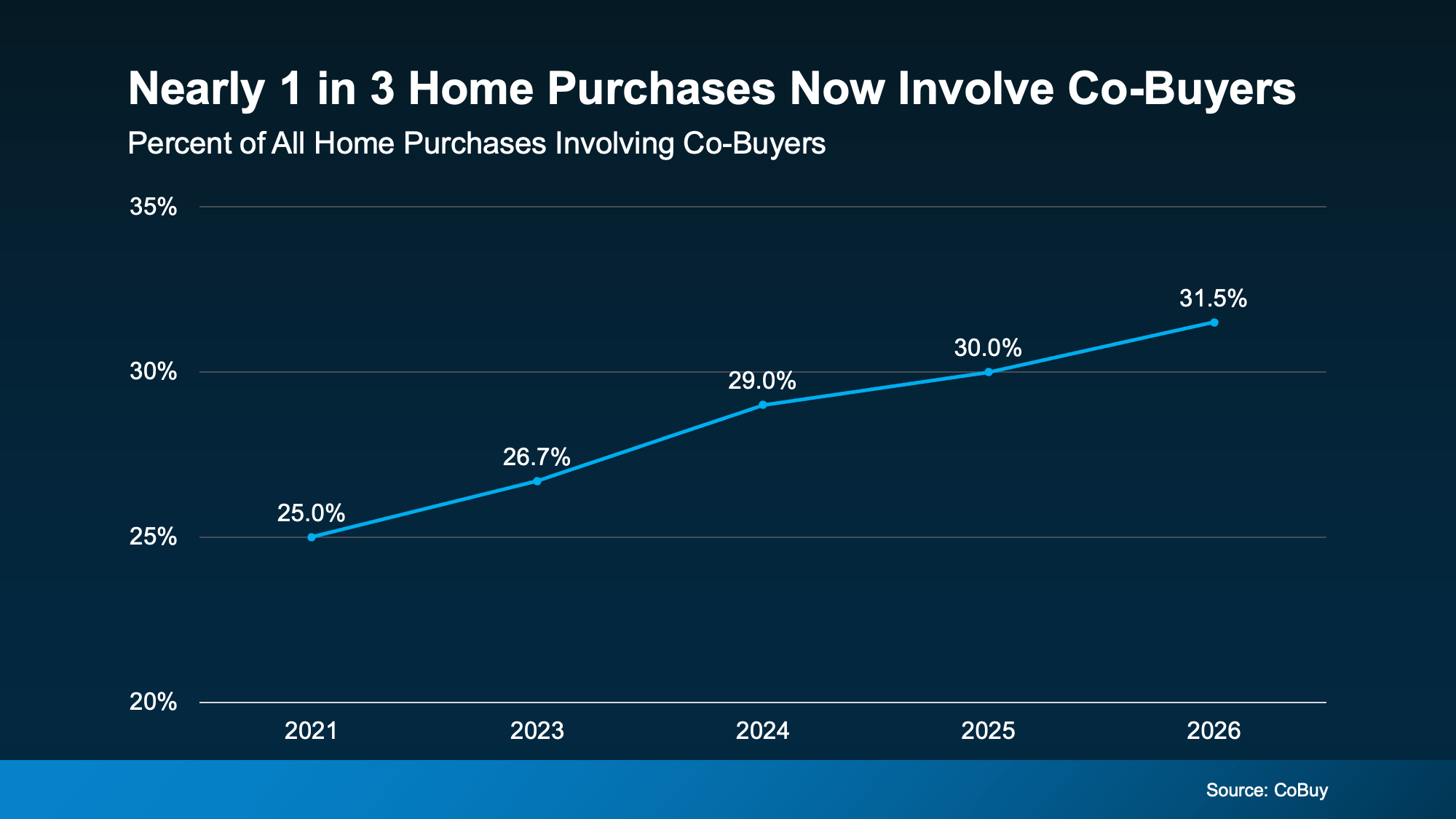
Four Reasons Co-Buying Works
According to NerdWallet’s analysis of co-buying, the primary advantages are straightforward and meaningful. Two people can save a down payment significantly faster than one, which shortens the timeline from “someday” to “signed.” Combined incomes give you more purchasing power, which means you may be able to afford a better home or a more desirable neighborhood than either buyer could access alone. Multiple incomes also improve your debt-to-income ratio, which directly affects what lenders will approve. And splitting a mortgage payment can make monthly ownership costs comparable to or even lower than renting, especially in markets like ours where rents have been rising steadily as we covered in Rent or Buy? The Real Tradeoff Most People Don’t Talk About.
The Things You Need To Think Through Before You Commit
Co-buying works best between people who trust each other and share financial goals. Before moving forward, everyone involved needs to agree on how costs are divided, who handles what responsibilities, and what happens if one person wants to sell, moves away, or experiences a financial change. A written co-ownership agreement is not a formality. It is a game plan for your investment that protects everyone involved and prevents the kind of disputes that can damage both finances and relationships.
Working with a real estate attorney to draft that agreement is a smart step. So is having an honest conversation about exit strategies before you close, not after. For buyers who want to understand the full financial picture before committing, The Truth About Home Affordability Today and Are Home Prices Going To Fall? give you the market context that should inform any major buying decision right now.
Co-Buying Is One of Several Creative Paths Into the Market
If co-buying does not fit your situation, there are other options worth knowing about. VA loan benefits can eliminate the down payment entirely for eligible Veterans as detailed in What Most Veterans Don’t Know About Their VA Home Loan Benefit. Multi-generational buying, where family members purchase together to combine incomes and share costs, is also gaining traction as we explored in When Buying a Home Feels Out of Reach, Some Families Do This Instead. And for buyers who have been saving, Getting a Tax Refund? Here’s How It Can Help You Buy a Home shows exactly how to accelerate that timeline. For a broader look at where first-time buyers are finding the best conditions right now, The 10 Best Markets for First-Time Buyers This Spring is worth a read.
What This Looks Like in South Jersey
South Jersey is actually well-suited for co-buying strategies. The mix of housing types across Camden County, from single-family homes to townhomes to condos, gives co-buyers flexibility to find a property that works for shared living or investment arrangements. And the proximity to Philadelphia makes these communities attractive to younger buyers who want urban access without urban price tags. Our Top Neighborhoods to Buy a Home in Camden County breaks down where buyers are finding the best value right now at every price point.
Affordability challenges are real. But they do not have to mean waiting indefinitely. Co-buying is helping first-time buyers stop waiting and start building equity. If you are curious whether it could work for your situation, the first step is understanding what becomes possible when you look at the numbers with a different approach.
Reach out to the MH Global team. Let’s run the numbers together and see what opens up when you consider co-buying as part of your strategy.